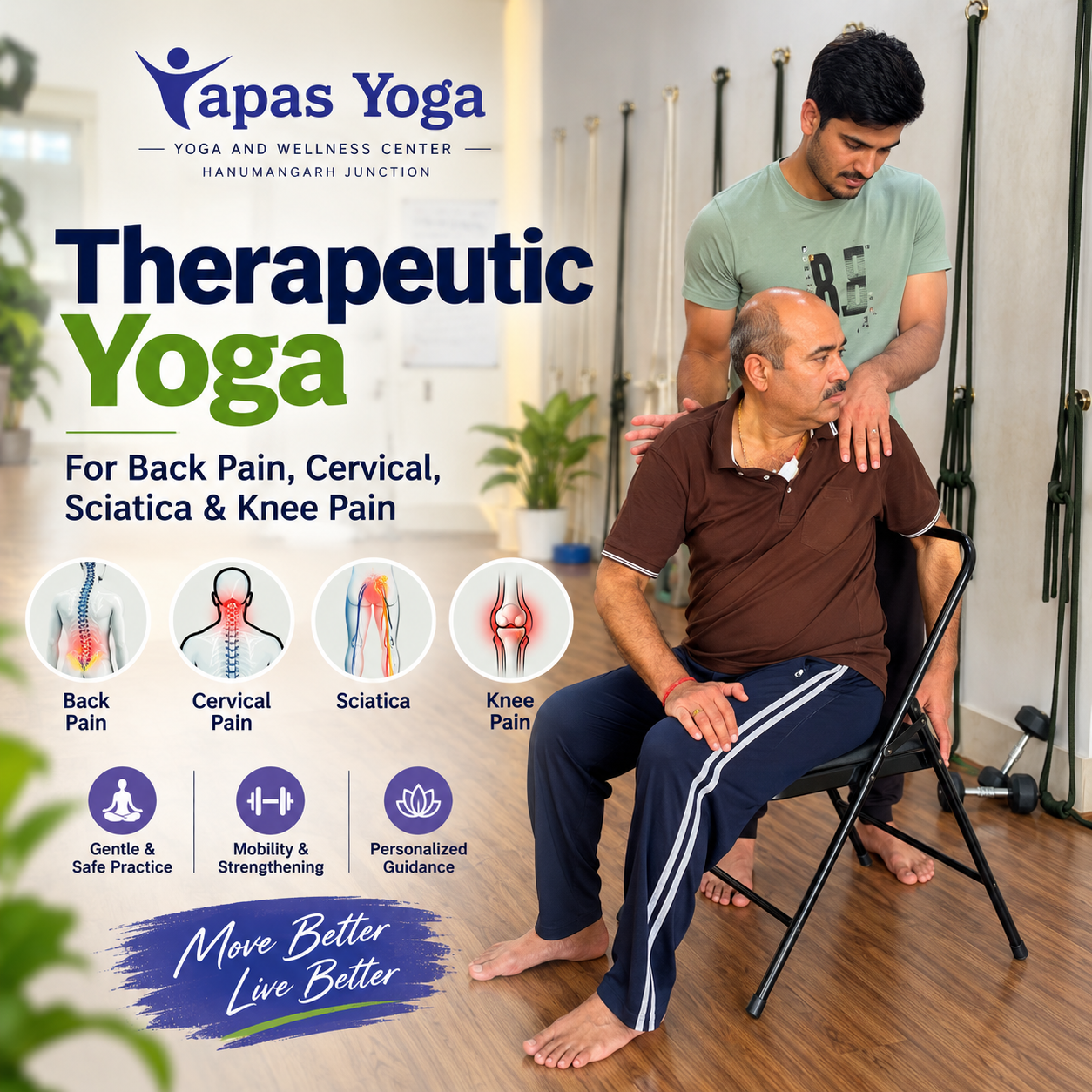
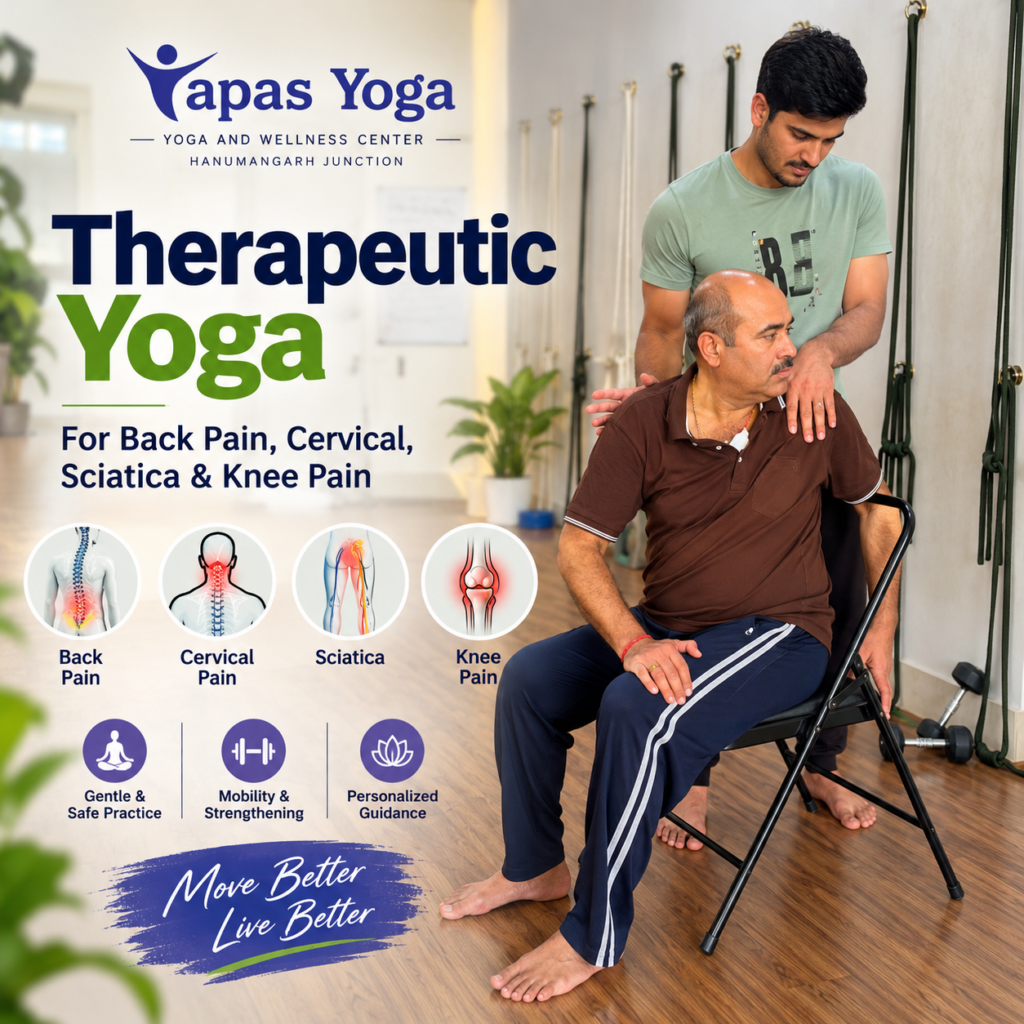
Therapeutic Yoga in Hanumangarh for Back, Cervical, Sciatica & Knee Pain.
Therapeutic Yoga for Back Pain, Cervical, Sciatica & Knee Pain in Hanumangarh
Are you looking for therapeutic Yoga for back pain, cervical pain, sciatica or knee pain in Hanumangarh?
Many people experience pain or stiffness because of long hours of sitting, poor movement habits, lack of physical activity, muscle weakness or simply getting less movement into their daily routine. However, the right approach can be different for every person.
Therapeutic Yoga is one approach that focuses on gentle movement, mobility, breathing, strength, flexibility and body awareness. Instead of simply performing difficult Yoga poses, the practice can be modified according to a person’s needs and current ability.
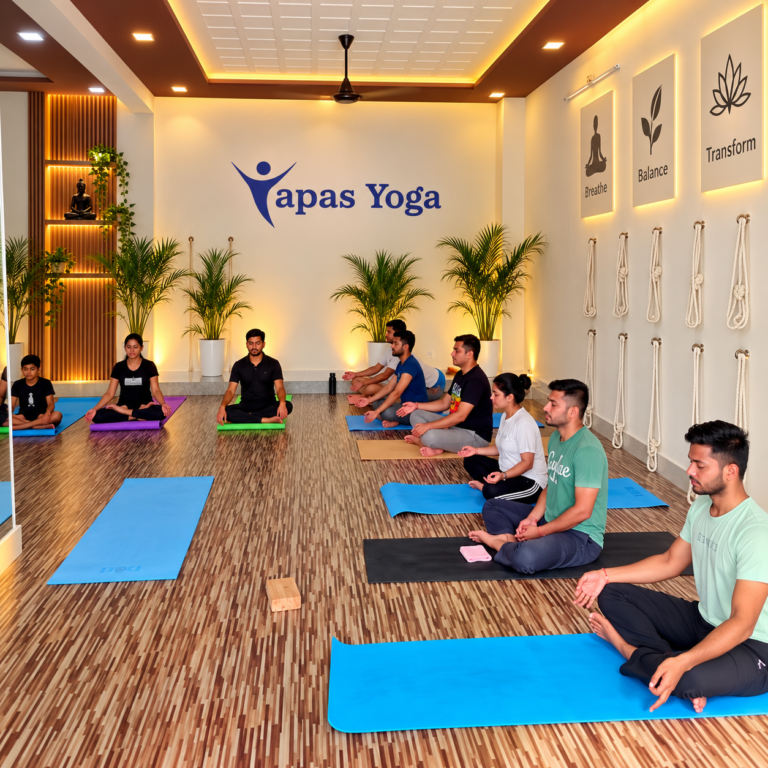
At Tapas Yoga and Wellness Center, therapeutic-oriented Yoga sessions are designed to help people develop better movement habits while working within their individual abilities.
Important: Therapeutic Yoga can be a supportive form of exercise and movement. It is not a replacement for medical diagnosis or treatment. If you have severe, sudden or persistent pain, an injury, numbness, weakness or other concerning symptoms, consult an appropriate healthcare professional.
What Is Therapeutic Yoga?
Therapeutic Yoga is an individualized approach to Yoga that uses appropriate Yoga postures, mobility exercises, breathing techniques, relaxation and strengthening movements according to a person’s needs.
Unlike a regular group Yoga class, therapeutic-oriented practice may involve more modifications and individual attention.
For example, one person may need gentle mobility work for stiffness, while another may need a gradual strengthening program after becoming inactive.
Therefore, the goal is not to make everyone perform the same poses.
Instead, the goal is to find movements that are appropriate for the individual.
Therapeutic Yoga for Back Pain
Back discomfort is very common, particularly among people who spend many hours sitting at a desk, driving or using a phone.
In addition, a lack of movement and reduced strength can sometimes contribute to stiffness and discomfort.
Depending on the cause, a suitable Yoga program may include:
- Gentle spinal mobility
- Hip mobility
- Core strengthening
- Hamstring and hip flexibility
- Postural awareness
- Breathing exercises
- Relaxation techniques
However, back pain has many possible causes. Therefore, the same exercise should not automatically be recommended to everyone.
A person with simple stiffness may require a very different approach from someone with a diagnosed spinal condition.
For this reason, assessment and appropriate modifications are important.
Yoga for Cervical Pain and Neck Stiffness
Long hours of computer work and phone use can mean that the neck and shoulders remain in the same position for extended periods.
As a result, some people experience neck stiffness, shoulder tightness or discomfort around the upper back.
A suitable Yoga and mobility program may focus on:
- Gentle neck movements
- Shoulder mobility
- Upper-back mobility
- Postural awareness
- Breathing
- Relaxation
- Strengthening of supporting muscles
Importantly, neck exercises should be performed gently. Avoid forcing the neck into extreme positions or continuing an exercise that increases pain, dizziness, numbness or other symptoms.
Therapeutic Yoga for Sciatica
Sciatica is commonly used to describe symptoms involving the sciatic nerve, which can include pain that travels from the lower back toward the leg.
However, not every type of leg pain is sciatica, and the underlying cause needs to be considered.
Therefore, if you have persistent or severe symptoms, getting an appropriate medical assessment is important.
Once a suitable approach has been established, Yoga may be used as part of a broader movement program.
Depending on the individual, this may include:
- Gentle mobility exercises
- Hip movement
- Core strengthening
- Controlled stretching
- Breathing practices
- Gradual functional movement
The key is not to force a stretch or exercise simply because it is called a “sciatica exercise.”
Your response to the movement matters.
Yoga for Knee Pain
Knee discomfort can also have many different causes.
For example, it may be related to previous injury, weakness, reduced mobility, activity levels, age-related changes or other conditions.
Therefore, a Yoga program for knee discomfort should be adapted to the person.
A suitable program may include:
- Gentle knee mobility
- Hip strengthening
- Leg strengthening
- Balance exercises
- Controlled squats or supported movements
- Flexibility work
- Body-awareness exercises
Gradually, improving strength and movement control can help a person become more confident with everyday activities.
However, exercises should be modified if they increase symptoms.
Why Is Individual Attention Important?
One of the biggest advantages of therapeutic-oriented Yoga is that exercises can be modified.
For example, two people may both say they have “back pain,” but their movement abilities, lifestyle, fitness levels and underlying causes may be completely different.
Therefore, giving both people exactly the same routine may not be appropriate.
At Tapas Yoga and Wellness Center, the focus is on understanding the person’s current ability and then selecting suitable movements, modifications and progressions.
As a result, the practice can be more personalized than simply following a generic exercise video.
Therapeutic Yoga Is Not About Difficult Yoga Poses
Sometimes people think Yoga means performing advanced poses.
In reality, therapeutic Yoga can be quite simple.
You may work on basic movements, controlled breathing, mobility and strengthening exercises.
For someone experiencing discomfort, a simple movement performed correctly may be more useful than an advanced pose performed incorrectly.
Therefore, progress should be measured by better movement and improved confidence—not by how difficult the Yoga pose looks.
Who Can Consider Therapeutic Yoga?
Therapeutic-oriented Yoga may be considered by people who want to work on:
- Back stiffness or discomfort
- Neck and shoulder stiffness
- Reduced mobility
- General muscle tightness
- Knee discomfort
- Flexibility
- Balance
- Strength
- Movement confidence
Nevertheless, the appropriate program depends on the individual.
People with significant pain, recent injuries, neurological symptoms or diagnosed medical conditions should first discuss exercise with their doctor or relevant healthcare professional.
How Often Should You Practice?
There is no single schedule that works for everyone.
Generally, consistency is more important than doing an extremely intense session once in a while.
For some people, a few supervised sessions each week combined with appropriate movement at home may be a practical approach.
Over time, the exercises can be adjusted as strength, mobility and confidence improve.
The goal is sustainable progress.
Therapeutic Yoga in Hanumangarh
If you are searching for therapeutic Yoga in Hanumangarh or Hanumangarh Junction, Tapas Yoga and Wellness Center offers Yoga and movement-focused sessions for people with different goals.
The approach can include:
- Therapeutic Yoga
- Mobility training
- Flexibility training
- Strength exercises
- Breathing practices
- Postural awareness
- Personalized Yoga sessions
Most importantly, the focus is on practicing according to your current ability rather than forcing your body into advanced movements.
Yoga or Physiotherapy: Which Should You Choose?
This is a common question.
The answer depends on what you need.
Physiotherapy is a healthcare profession that can assess and treat many musculoskeletal and other conditions.
Yoga, on the other hand, can be used as a form of physical activity and movement practice.
Therefore, they should not always be viewed as competing options.
In some situations, a healthcare professional may recommend exercises that can later become part of a person’s regular movement routine.
If you have an injury or medical condition, speak with the appropriate healthcare professional before starting or changing your exercise program.
Final Thoughts
Therapeutic Yoga is not about finding one “magic” Yoga pose for back pain, cervical pain, sciatica or knee pain.
Instead, it is about understanding the individual, choosing appropriate movements and progressing gradually.
The right practice may include Yoga, mobility, strengthening, breathing and relaxation.
Most importantly, listen to your body and don’t force painful movements.
If you are looking for therapeutic Yoga in Hanumangarh, you can explore the programs at Tapas Yoga and Wellness Center and discuss your goals before starting a practice.
Start where you are. Move with awareness. Progress gradually.
Frequently Asked Questions
Is therapeutic Yoga good for back pain?
Therapeutic Yoga may be useful as part of a suitable movement program for some people with back discomfort. However, the cause of back pain matters, so persistent or severe symptoms should be assessed by an appropriate healthcare professional.
Can Yoga help with cervical pain?
Gentle Yoga and mobility exercises may help some people manage neck stiffness and improve movement. However, exercises should be modified according to the individual’s condition, and painful or concerning symptoms should not be ignored.
Can Yoga be done for sciatica?
Yoga may be incorporated into a broader exercise program for some people with sciatica. However, the underlying cause and severity of symptoms should be considered first.
Is Yoga suitable for knee pain?
Some people with knee discomfort may benefit from appropriately modified mobility, strengthening and Yoga exercises. Nevertheless, the exercises should depend on the individual’s condition and tolerance.
Is therapeutic Yoga the same as physiotherapy?
No. Therapeutic Yoga and physiotherapy are not the same. Physiotherapy is a healthcare profession, while therapeutic-oriented Yoga uses Yoga and movement practices to support mobility, strength and wellbeing.
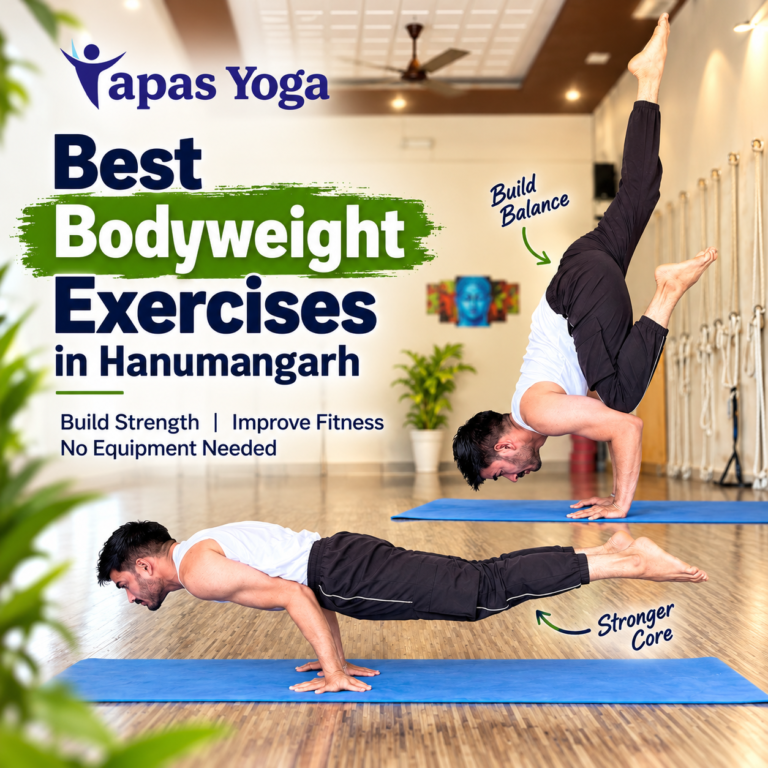
Power yoga, Bodyweight, calisthenics Exercises in Hanumangarh
Therapeutic Yoga in Hanumangarh for Back, Cervical, Sciatica & Knee Pain